
Charred blocks falling away from a spacecraft during atmospheric re-entry is terrifying to watch unfold on live television. Yet, that is exactly what happened to the uncrewed Artemis 1 mission back in late 2022, leaving engineers scrambling for answers. Is the Artemis 2 heat shield safe based on the fresh telemetry NASA just dumped into the public domain? Honestly, this is wild—because the new data reveals unexpected thermal erosion patterns that nobody saw coming during initial computer simulations.
Look, here is the deal with deep space exploration. We are pushing humanity back toward the moon and eventually onward to Mars, but we cannot afford even a single catastrophic structural failure. As the NASA official portal notes, understanding material limits under extreme thermal vacuum conditions is the single biggest bottleneck facing modern aerospace engineering right now.
- Core Finding: Artemis 1 unexpectedly shed large chunks of Avcoat ablative material during re-entry.
- The Stakes: NASA's new telemetry tests simulate extreme heating to determine if the Orion capsule is safe for human occupants.
- Next Horizon: Engineers are debating whether to fly as-is or modify the thermal protection system before launch.
What Went Wrong With the Artemis 1 Thermal Protection System?
 (Related Read: Why U.S. Sanctions Against the A/I Collective Matter)
Image: NASA Kennedy Space Center / NASA/Cory Huston / Wikimedia Commons (Public domain)
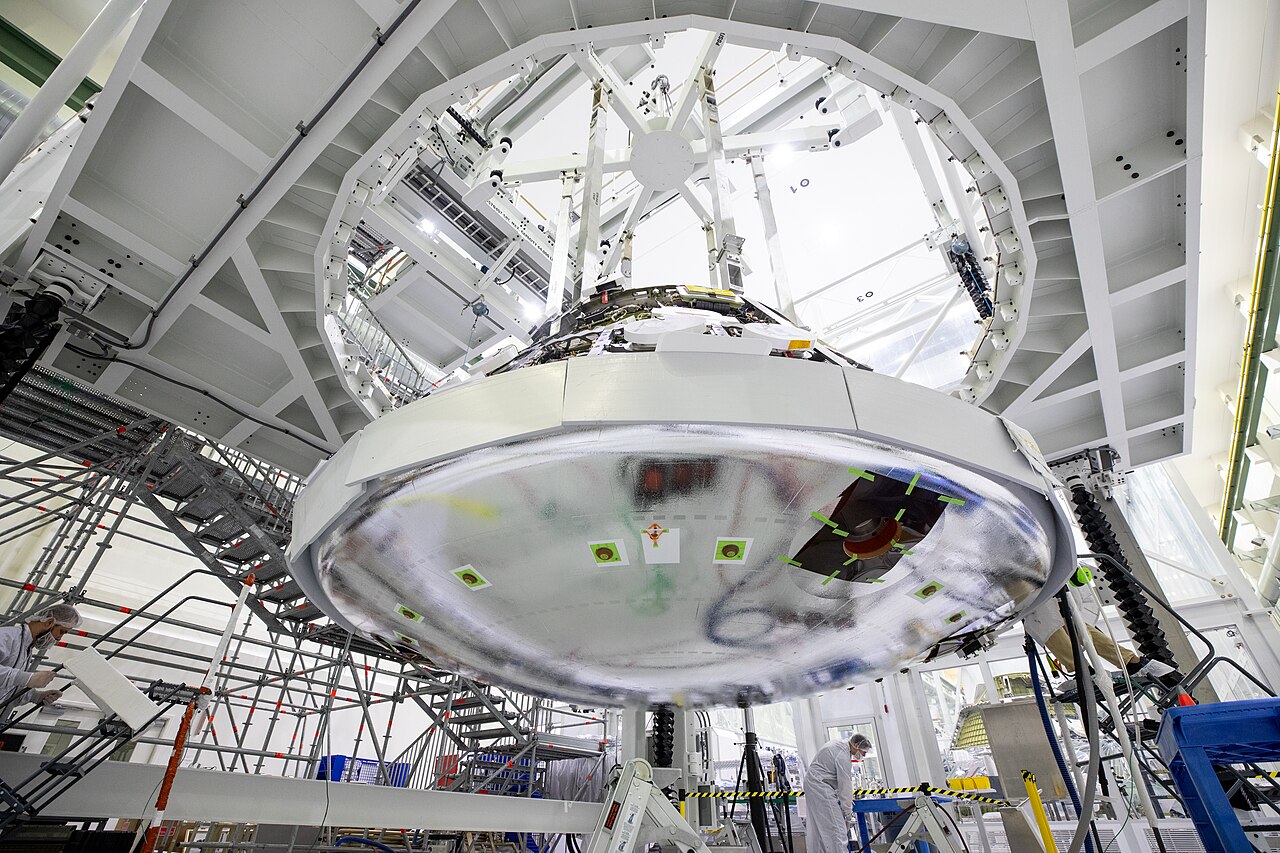
During the historic 2022 lunar flyby, sensors recorded over 100 instances of the spacecraft shedding material way faster than predicted. The Avcoat ablative coating—designed to slowly melt and char away in a controlled manner—literally cracked and popped off in chunks. That is not supposed to happen, and it immediately sparked intense debates across global NASA mission updates regarding structural integrity.
Big deal.
Engineers initially blamed manufacturing anomalies, but recent laboratory tests point to a deeper physics problem. The extreme thermal vacuum of deep space super-cools the spacecraft, trapping gases inside the resin binder. When the capsule hits Earth's atmosphere at a blistering 24,500 mph, those trapped gases expand instantly, causing explosive spalling. I know what you're thinking—how did ground tests miss this entirely?
The truth is, replicating the exact combination of a deep space freeze followed by a hypersonic atmospheric slam in a terrestrial lab is brutally difficult. The diagram in NASA's latest telemetry drop illustrates heat fluxes spiking well beyond design margins. It turns out that getting a crewed capsule back from the planet's natural satellite is much harder than our 1970s Apollo models led us to believe.
See where this is going?
Is the Artemis 2 Heat Shield Safe Enough for Human Crew?

Image: NASA Kennedy Space Center / NASA/Cory Huston / Wikimedia Commons (Public domain)
This is the million-dollar question keeping flight directors awake at night. Is the Artemis 2 heat shield safe for astronauts Reid Wiseman, Victor Glover, Christina Koch, and Jeremy Hansen? Agency leadership insists the risk is well within acceptable safety thresholds, but internal whistleblowers aren't entirely convinced.
Here is what the latest thermal vacuum data actually tells us about the updated Orion stack:
- Modified Bake-Outs: NASA subjected the new shield components to extended vacuum baking to purge volatile gases.
- Redesigned Seams: Critical weak points along the radial joints have been reinforced with denser ceramic fibers.
- Enhanced Sensor Arrays: Over 250 new temperature and pressure sensors will monitor real-time degradation during flight.
- Trajectory Adjustments: Flight planners can alter the re-entry corridor to slightly reduce peak thermal loads if necessary.
"We saw structural spalling that exceeded our pre-flight computer models by a factor of four. Adjusting our ground testing parameters was the only responsible path forward."
As the comparison charts in the research paper demonstrate, the updated mitigation strategies drop predicted erosion rates significantly. But until a spacecraft actually takes the hit in the upper atmosphere, computer models remain just educated guesses. The space industry watches closely, knowing that safety margins leave zero room for error.
Pretty crazy when you think about it.
How Do SpaceX Developments Compare to NASA's Orion Architecture?

Image: NASA Kennedy Space Center / NASA/Cory Huston / Wikimedia Commons (Public domain)
While NASA sticks to traditional ablative tiles for Orion, commercial rivals are taking a totally different route. Companies like SpaceX rely on mechanical transpiration cooling and reusable ceramic tiles for their heavy lift vehicles. But those systems come with their own terrifying failure modes, as we've all witnessed during fiery orbital test flights.
Now, the fundamental engineering philosophy divides the aerospace community right down the middle. NASA prefers a sacrificial shield that self-destructs to protect the capsule interior. SpaceX prefers a durable skin that survives intact, ready to fly again tomorrow.
So, which approach is genuinely superior for interplanetary transit? Right now, the jury is still out, and both architectures are learning painful lessons in real time. One thing is certain: whether you are landing on the moon or gearing up for a future Mars settlement, thermal protection remains the ultimate engineering nightmare.
Fascinating.
What Are the Next Steps Before the Launch Window Opens?
Time is running out for the flight readiness review board to make their final call. Technicians at Kennedy Space Center are currently wrapping up final acoustic and thermal stress evaluations on the flight-ready Orion capsule. If any new red flags pop up in the telemetry data, mission managers will not hesitate to delay the launch.
But political and programmatic pressures are mounting rapidly behind the scenes. International partners have invested billions into this architecture, and keeping the schedule intact is a massive priority. Ultimately, human lives hang in the balance, superseding any public relations timeline or budgetary milestone.
So here's what happened. we are standing at a fascinating crossroads in aerospace history. The data tells a story of unexpected physical phenomena meeting stubborn human ingenuity head-on. Whether this mission marks a triumphant return to deep space or another cautionary tale depends entirely on these final telemetry numbers. Explore further: Why GUIs should be fully keyboard-driven for peak flow.
Is the Artemis 2 mission still scheduled for late 2025?
NASA currently targets late 2025 or early 2026 for the crewed lunar flyby, though schedule adjustments remain possible depending on final safety reviews.
Why did the Artemis 1 heat shield lose material?
Deep space vacuums trapped gases inside the Avcoat resin binder, causing explosive cracking and shedding when exposed to extreme atmospheric re-entry heat.
Are astronauts training for heat shield failure scenarios?
Real talk — yes, the flight crew undergoes extensive simulator training for emergency aborts and unexpected thermal structural anomalies during re-entry. See also: Neuralink Telepathy Clinical Trial Patient Updates 2026.
How does the Orion heat shield compare to Apollo?
Orion uses a modern iteration of the Apollo-era Avcoat material, but applied in a monolithic block design rather than individual glued tiles.
The coming months will test whether our engineering models finally match reality. As the countdown ticks down, the entire world watches to see if humanity is truly ready to venture back out into the cosmic dark.