Ever wondered how ChatGPT actually reads your messy, caffeine-fueled text prompts without having a minor digital meltdown?
Transformers Explained Visually is the answer we have all been waiting for, turning dense mathematical matrices into something you can actually look at and understand.
Look, here is the deal: modern tech has a massive transparency problem, but open-source visualizers are finally fixing that.
- Core Finding: Interactive visualizers make complex neural architectures accessible to non-engineers.
- The Stakes: Understanding hardware and software bottlenecks is crucial for future innovation.
- Next Horizon: Browser-based models are democratizing AI education faster than ever.
How Does Transformers Explained Visually Work in Your Browser?
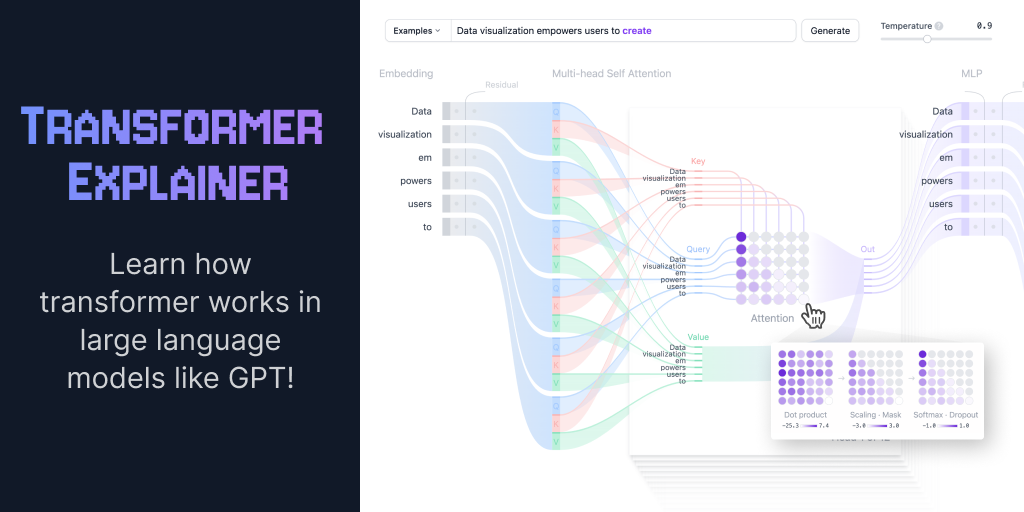
Image source: poloclub.github.io See also: James Webb Space Telescope TRAPPIST-1e Atmospheric Update.
If you head over to the Polo Club Transformer Explainer developed by researchers at Georgia Tech, you will see an entire large language model running right inside your web browser using WebGL and D3.js.
As the visual diagrams above illustrate, you can type any custom sentence and watch every single token get converted into embeddings in real-time.
Honestly, watching the multidimensional vectors bounce around is wild, especially when you realize this entire frontend runs without pinging an external server. (Related Read: Why Brood War Bench Is Shaking Up Tech Benchmarks)
Wild, right?
Why Is Self-Attention the Real Hero of Modern AI?
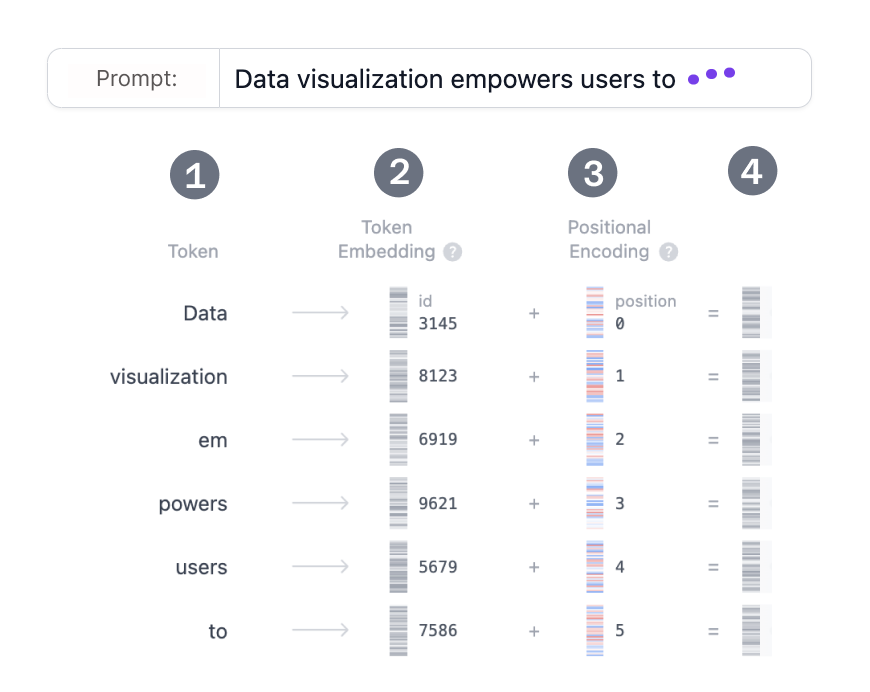
Image source: poloclub.github.io
Look, for decades, natural language processing relied on recurrent neural networks that processed text sequentially like reading a book one word at a time.
Then came the landmark 2017 paper Attention Is All You Need published by researchers at Google Brain, completely rewriting the rules of the game.
Instead of reading sequentially, the attention mechanism lets every word look at every other word simultaneously to calculate contextual relevance.
"Attention allows the model to dynamically weigh the importance of different words in a sentence, regardless of their positional distance."
What Happens Inside the Hidden Layers of a Neural Network?
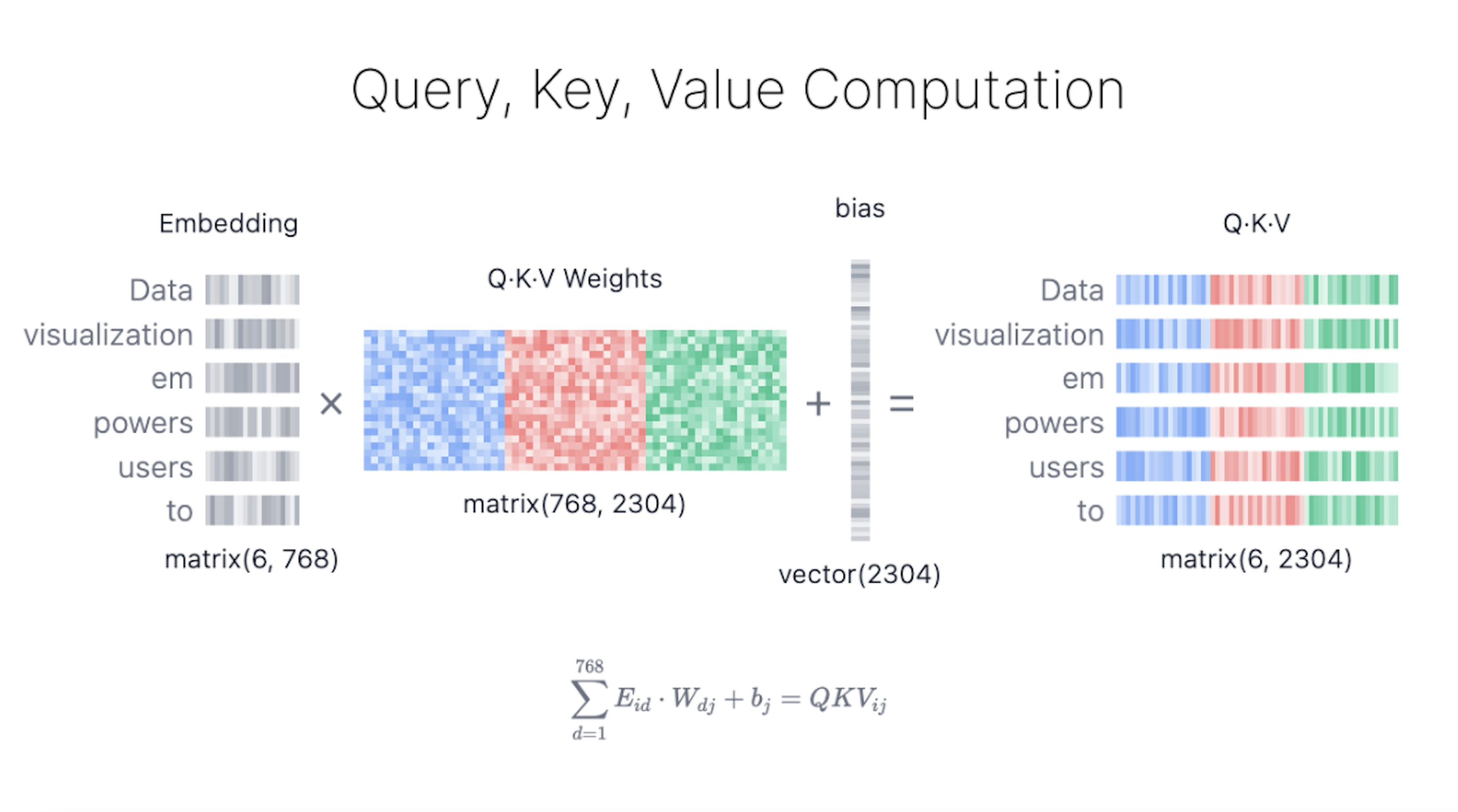
Image source: poloclub.github.io
When people talk about AI running on specialized hardware like NVIDIA H100 GPUs, they usually picture abstract data centers burning through megawatts of electricity.
The interactive visualizer strips away that intimidating abstraction and breaks the model down into clear, manageable components:
- Tokenization: Breaking raw text strings down into discrete numerical IDs that the model can parse.
- Embedding Space: Mapping those tokens into high-dimensional geometric coordinates where semantic meanings live close together.
- Multi-Head Attention: Running dozens of parallel attention calculations to capture grammar, syntax, and nuance all at once.
- Feed-Forward Networks: Processing the attention outputs through non-linear layers to formulate the final next-token prediction.
Here's the thing — every single layer transforms the input vectors just a little bit more until the output probability distribution emerges.
Can Anyone Build and Train a Custom Startup Model Today?
Building a competitive AI startup used to require millions of dollars in venture capital and exclusive access to proprietary supercomputers.
Today, open-source educational software and browser-based visualization tools are lowering the barrier to entry for solo founders and curious students alike.
Mind-blowing stuff.
When you can actually see how weights update and how token probabilities shift, debugging a misbehaving model stops feeling like pure guesswork.
Pretty crazy when you think about it.
What Are the Next Big Frontiers for Visual AI Explainability?
We are only scratching the surface of what interactive machine learning visualization can achieve for public literacy and technical transparency.
Researchers are already working on expanding these visualizers to handle billion-parameter multimodal architectures that process both text and images concurrently. You might also like: LK-99 Replication Update: Where Does Physics Stand Now?.
The more intuitive these tools become, the faster the next wave of consumer gadgets and developer utilities will hit the mainstream market.
Frequently Asked Questions
What is a transformer model in plain English?
A transformer is a deep learning architecture that processes words in relation to all other words in a sentence simultaneously, rather than one word at a time.
How do I use the Transformer Explainer tool?
You simply open the web-based app, type any custom sentence into the input box, and click through the interactive layers to watch tokens transform in real-time.
Do I need a powerful GPU to run these visualizers?
No, tools like the Polo Club explainer run entirely client-side in your web browser using standard CPU and WebGL graphics rendering.
Why is self-attention so important for language models?
Self-attention allows models to understand long-range context and ambiguous pronouns by calculating mathematical relationships between distant words instantly.
So the next time someone tries to tell you that deep learning is just an inscrutable black box, point them toward the visualizers making neural networks transparent once and for all.