Aliens might just be hiding behind the latest Webb telescope exoplanet K2-18b water vapor update that has the entire scientific community buzzing. Look, here is the deal—when astrobiologists start whispering about carbon-bearing molecules 120 light-years away, you pay attention. Reddit threads are melting down, and Astro-Twitter is having an absolute field day with the newest spectral graphs.
For years, our planetary obsession was entirely locked on the red dirt of our immediate celestial neighborhood. We mapped canyons on Mars and dreamed of outposts on the moon, hoping to find ancient microbial sludge. But true space exploration just shifted gears toward distant worlds outside our solar system entirely. Forget the planetary neighbors for a second; the real action is happening in the constellation Leo right now.
- Core Finding: JWST detected carbon dioxide and methane in the atmosphere of K2-18b, fueling excitement over potential habitability.
- The Stakes: This marks a massive leap forward in humanity's quest to detect alien biosignatures on distant exoplanets.
- Next Horizon: Astronomers are now pushing for longer exposure times to confirm the controversial dimethyl sulfide readings.
What Does the New Webb Telescope Exoplanet K2-18b Water Vapor Update Reveal?

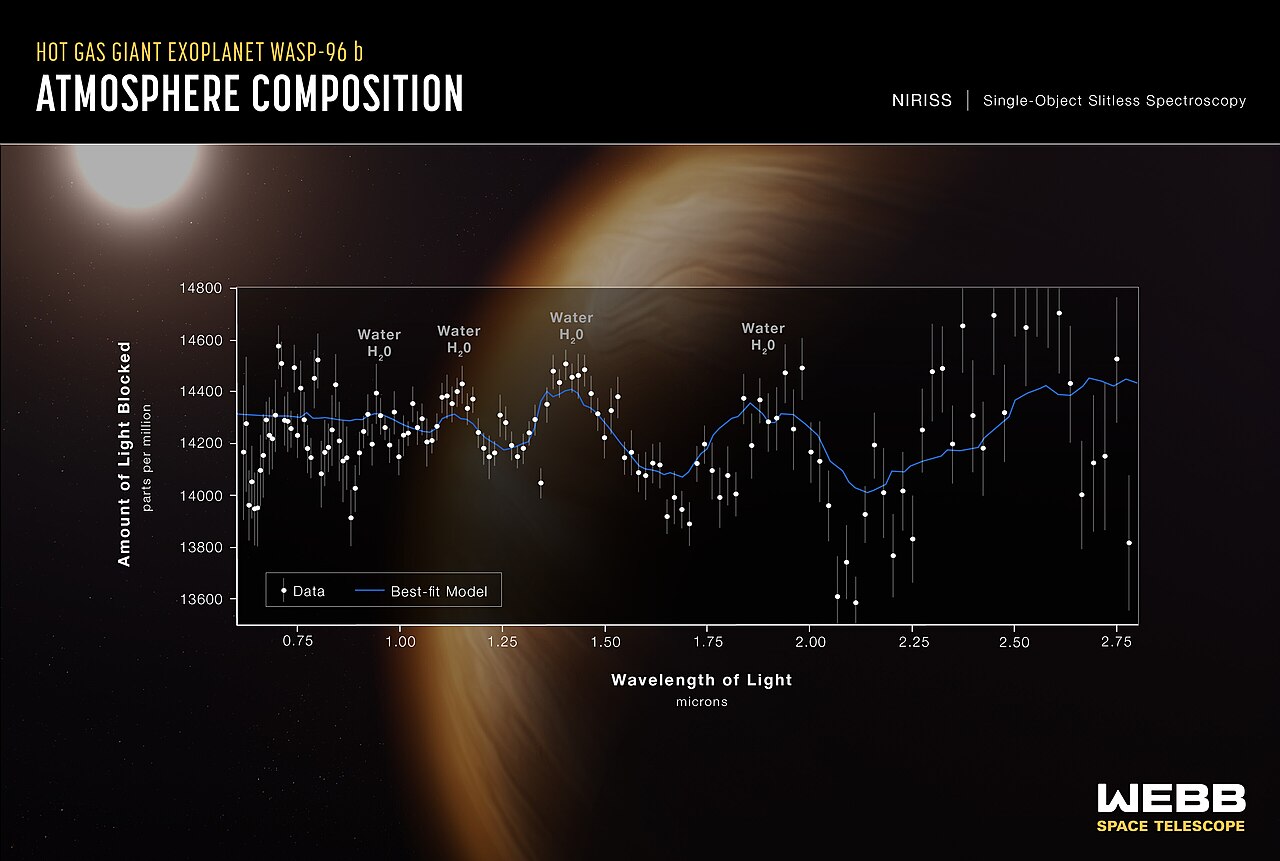
Let us break down the raw numbers because the data coming out of the NASA James Webb Space Telescope facility is nothing short of staggering. Researchers are analyzing transit spectroscopy data that captures starlight filtering through the thick atmosphere of K2-18b. The resulting transmission spectrum clearly highlights signatures of methane and carbon dioxide without a heavy envelope of ammonia.
That chemical recipe strongly points toward what scientists call a Hycean world—a planet featuring a hydrogen-rich atmosphere above a global water ocean. Honestly, this is wild to think about when you realize we are probing the chemical makeup of a world over 700 trillion miles away. As the spectral graphs illustrate, the absorption lines for carbon-bearing molecules pop out with remarkable statistical clarity.
See where this is going?
Is K2-18b Really a Habitable Ocean World?
Before we pack our bags and book a flight with SpaceX, we need to pump the brakes just a bit. Not every wet planet is a welcoming oasis, and K2-18b is roughly 8.6 times the mass of our home planet. That puts it squarely in the sub-Neptune category, meaning it might possess a crushing, supercritical fluid ocean rather than gentle tropical beaches.
Here is what researchers are currently debating in published papers over at Nature Astronomy:
- The presence of methane and carbon dioxide is scientifically verified by multiple instruments.
- Data hints at the possible existence of dimethyl sulfide (DMS), a molecule produced exclusively by living organisms on Earth.
- Critics argue that UV radiation from the host M-dwarf star could easily break down complex organic compounds.
- Future transit observations are already scheduled to gather double the photon counts to settle the debate.
"Detecting biosignatures in a sub-Neptune atmosphere is the ultimate high-wire act of modern observational astrophysics."
How Does JWST Actually Capture Alien Atmospheres?

I know what you are thinking—how on earth do you read the air of a tiny world passing in front of a distant star? It all comes down to precise transit photometry using the Near-Infrared Imager and Slitless Spectrograph (NIRISS) instrument. When the world transits its host star, fractionally dimming the starlight, tiny amounts of light pass directly through its upper gas layers.
Listen, each chemical compound acts like a tiny molecular fingerprint, absorbing specific wavelengths of infrared light. The onboard detectors map these missing wavelengths into distinct dips on a data visualization chart. That is how astronomers can confidently declare the presence of water vapor without ever dipping a bucket into an alien sea.
What Are the Biggest Criticisms of the Recent Data?
Science moves forward through fierce debate, and this discovery is facing intense scrutiny from skeptical research groups. Some modeling teams suggest that the interior temperatures of K2-18b are far too high for liquid water to condense at the base of its atmosphere. Instead, they model a churning, magma-ocean interior that could easily mimic the spectroscopic signals we are attributing to biological activity.
Here's the catch — the tentative dimethyl sulfide signal sits right at the edge of statistical significance, hovering around a 2-sigma threshold. In the strict world of physics, you generally want a 5-sigma detection before you pop the champagne bottles and rewrite textbooks. Until we get those cleaner observations, the jury remains out on whether we are looking at real alien biology or an elaborate chemical illusion.
Mind-blowing stuff.
Sound familiar?
No joke.
Where Do We Go From Here in the Search for Life?
The momentum behind this Webb telescope exoplanet K2-18b water vapor update proves that we are living through a golden era of discovery. Ground-based observatories and upcoming space missions are already lining up follow-up observation time for Cycle 3. Every single photon collected brings us one step closer to answering the ultimate existential question of our lonely place in the cosmos. See also: Small Models Have Arrived: The End of Massive AI?. See also: Why GUIs should be fully keyboard-driven for peak productivity.
Here's the thing — whether K2-18b turns out to be a boiling steam bath or a genuine cradle for alien life, the methodology has been permanently transformed. We can now peer deep into distant solar systems and pick apart their atmospheric secrets with breathtaking precision. What will we find when we point these golden mirrors at the next target on the list? Explore further: Why U.S. Sanctions Against the A/I Collective Matter.
Frequently Asked Questions
Is K2-18b confirmed to have liquid water oceans?
Not definitively yet, though atmospheric models strongly support the presence of a hydrogen-rich gas envelope above a possible global ocean layer.
How far away is the exoplanet K2-18b from Earth?
K2-18b sits approximately 120 light-years away from our solar system in the constellation Leo, orbiting a cool red dwarf star.
Why is dimethyl sulfide so exciting to astronomers?
On Earth, dimethyl sulfide is produced almost entirely by living marine phytoplankton, making it an intriguing potential biosignature gas.
Can we ever visit K2-18b using current technology?
No, traveling 120 light-years with current propulsion technology would take hundreds of thousands of years, so remote spectroscopy is our only option.